The Olm
AKA: baby dragon
Taxonomy
Animal (Common Name): Olm
Domain: Eukaryote
Kingdom: Animalia
Phylum: Chordata
Class: Amphibia
Order: Urodela
Family: Pteidae
Genus: Proteus
Species: Proteus anguinus
Habitat
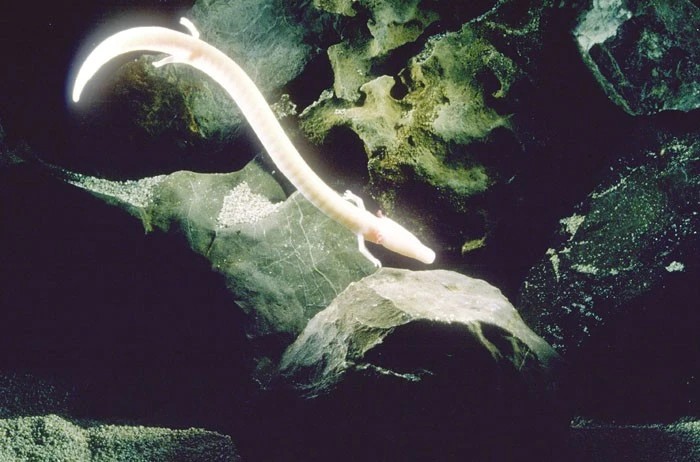
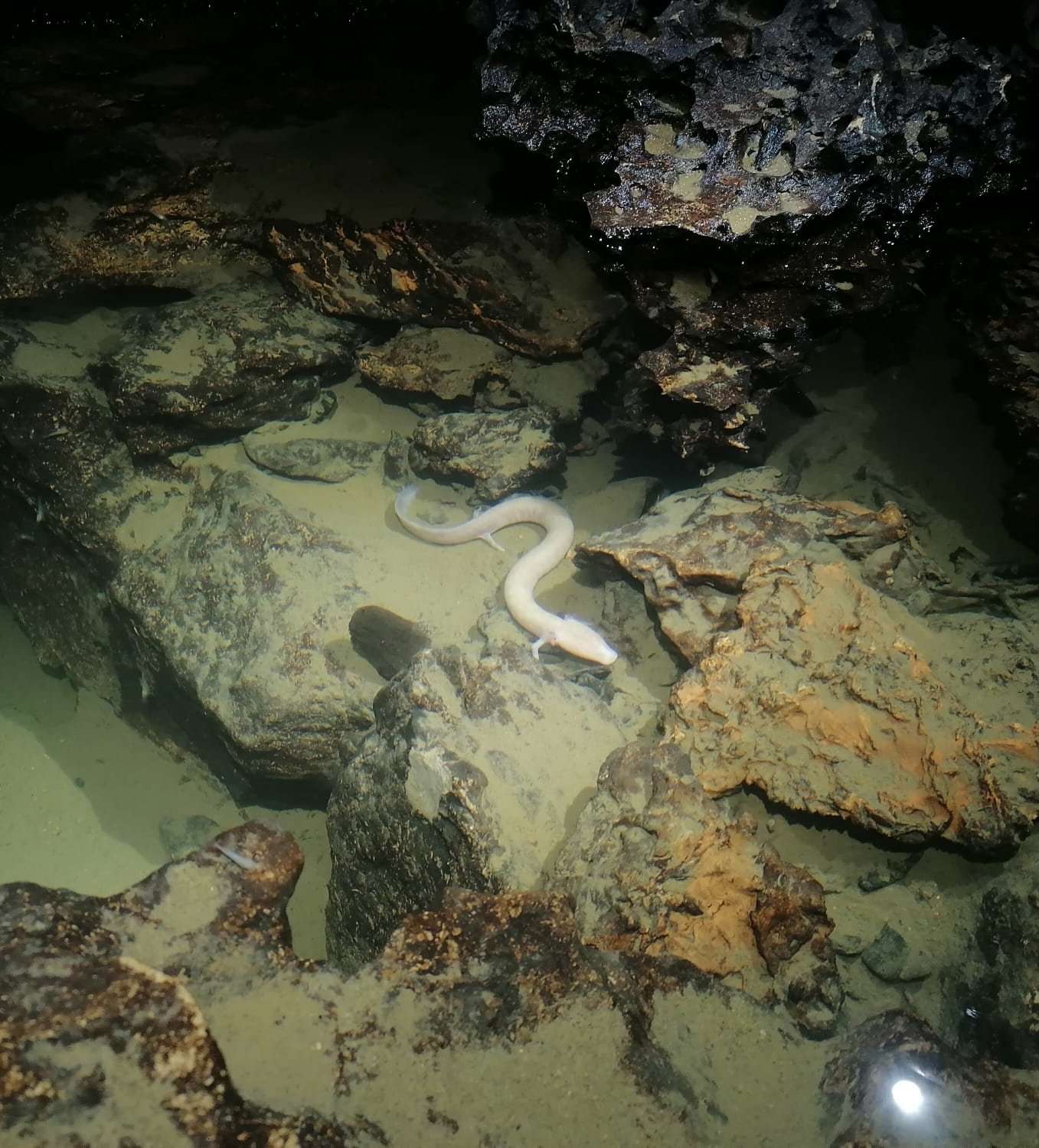
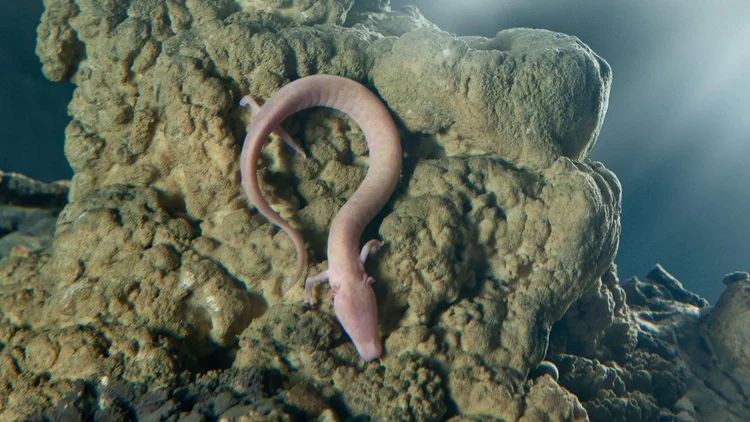
Unlike most other amphibians, they never go on land. Like axolotls they stay in the juvenile phase for their whole life, making them entirely aquatic. It lives in caves in the Dinaric Alps and is found naturally only in the underground water that flows through the limestone bedrock under the Soca River near Trieste Italy, southern Slovenia, southwestern Croatia, and Bosnia and Herzegovina. It was first mentioned in 1689 by a local naturalist named Valvasor who reported that, after heavy rains, the olms were washed up from the underground waters and were believed by local people to be a cave dragon's offspring. They can only live in extremely clean and pure water, so pollution is destroying their homes. The water temperatures they live in range from 5-15 degrees celsius, or 41-59 degrees fahrenheit.
Adaptations
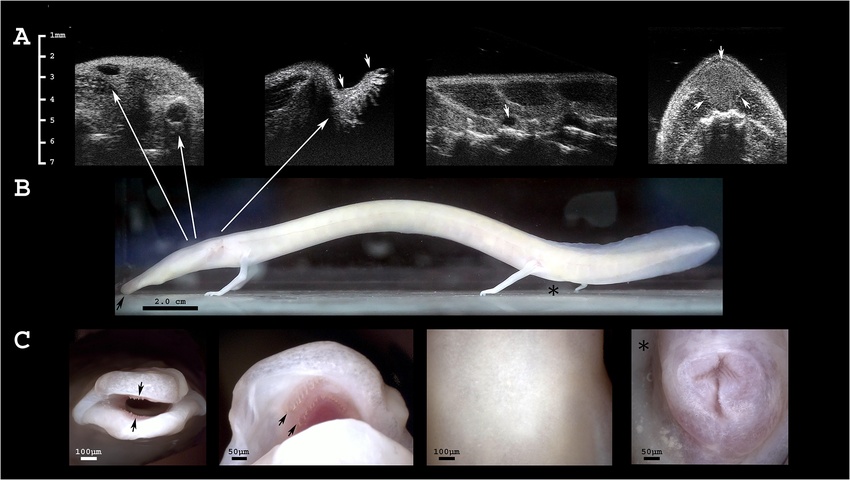
1. Sensory organs; They are blind but have stronger other senses. They have significantly stronger senses of smell than ALL other amphibians, allowing for easy detection of various compounds in the water, beneficial for finding food and mating. They also have extremely sensitive hearing, registering sound waves from 10hz to 12,000hz easily. They also have specialized sensory organs on their heads that can detect electrical signals and electric fields, with some behavioral experiments showing that it can align itself with magnetic fields. Despite its eyes being regressed into its head early in development, its skin actually has light sensitive cells that provide feedback to the olm as a rudimentary form of sight.
2. Olms have "supernatural laziness", an extremely slow and efficient metabolism allowing up to 10 years without food. They try to exert as little energy as possible, with one going on record to have not moved for 7 years.
3. Olms have a lifespan of over 100 years, potentially being the longest living amphibian.
Appearance & Anatomy
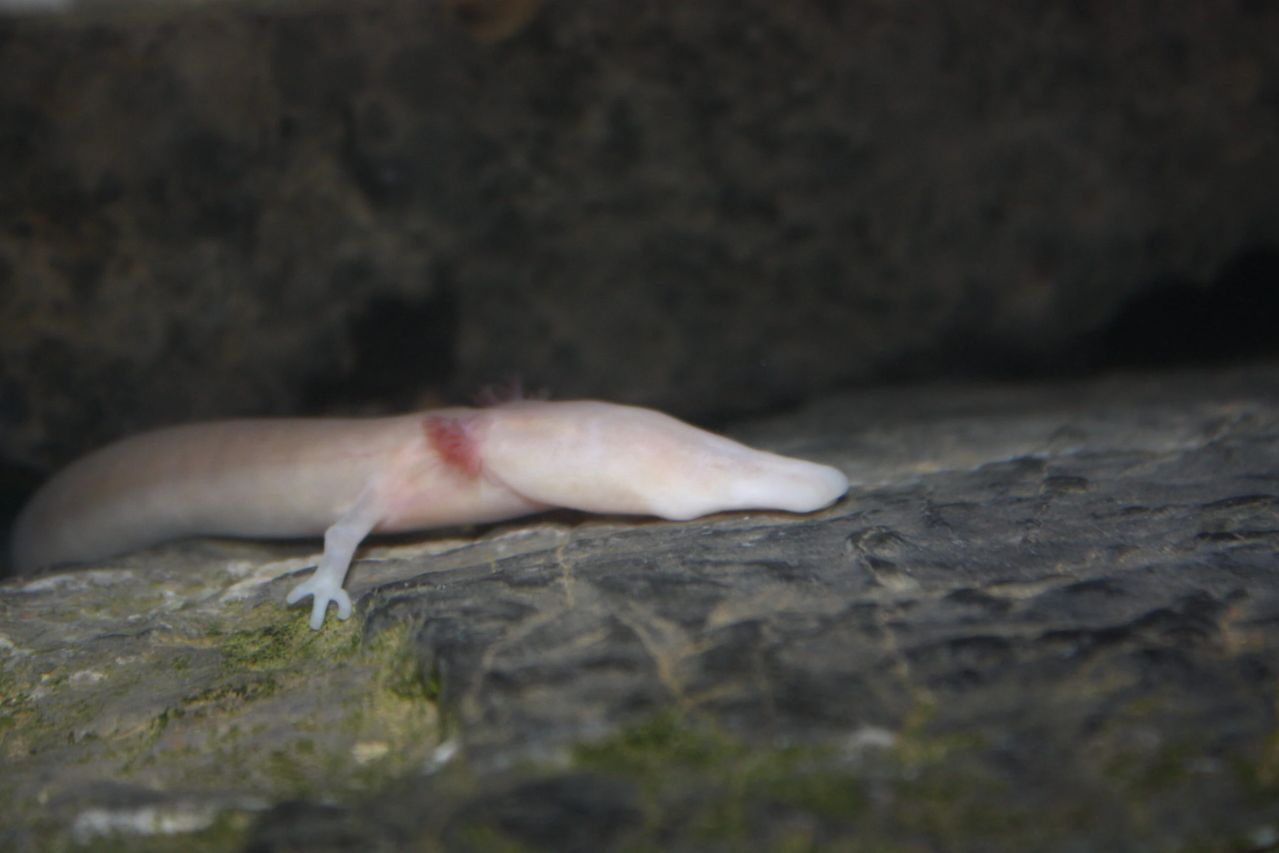
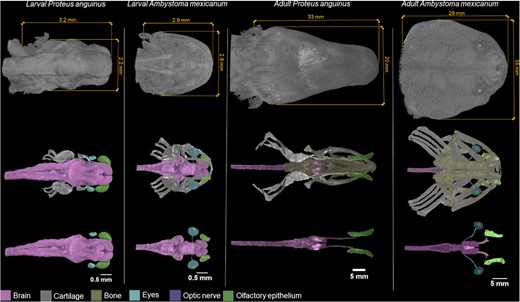
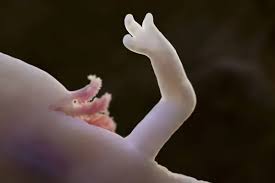
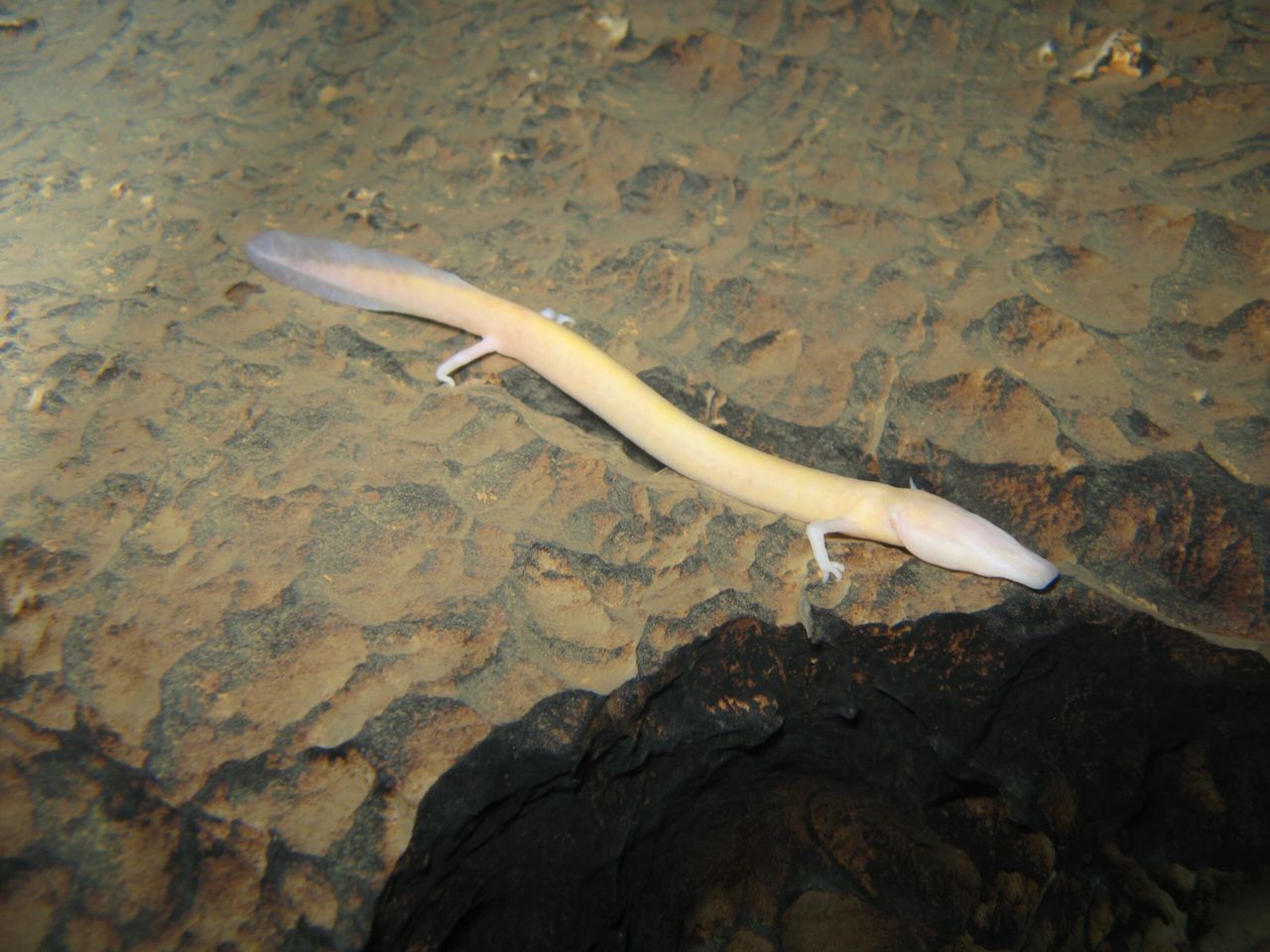
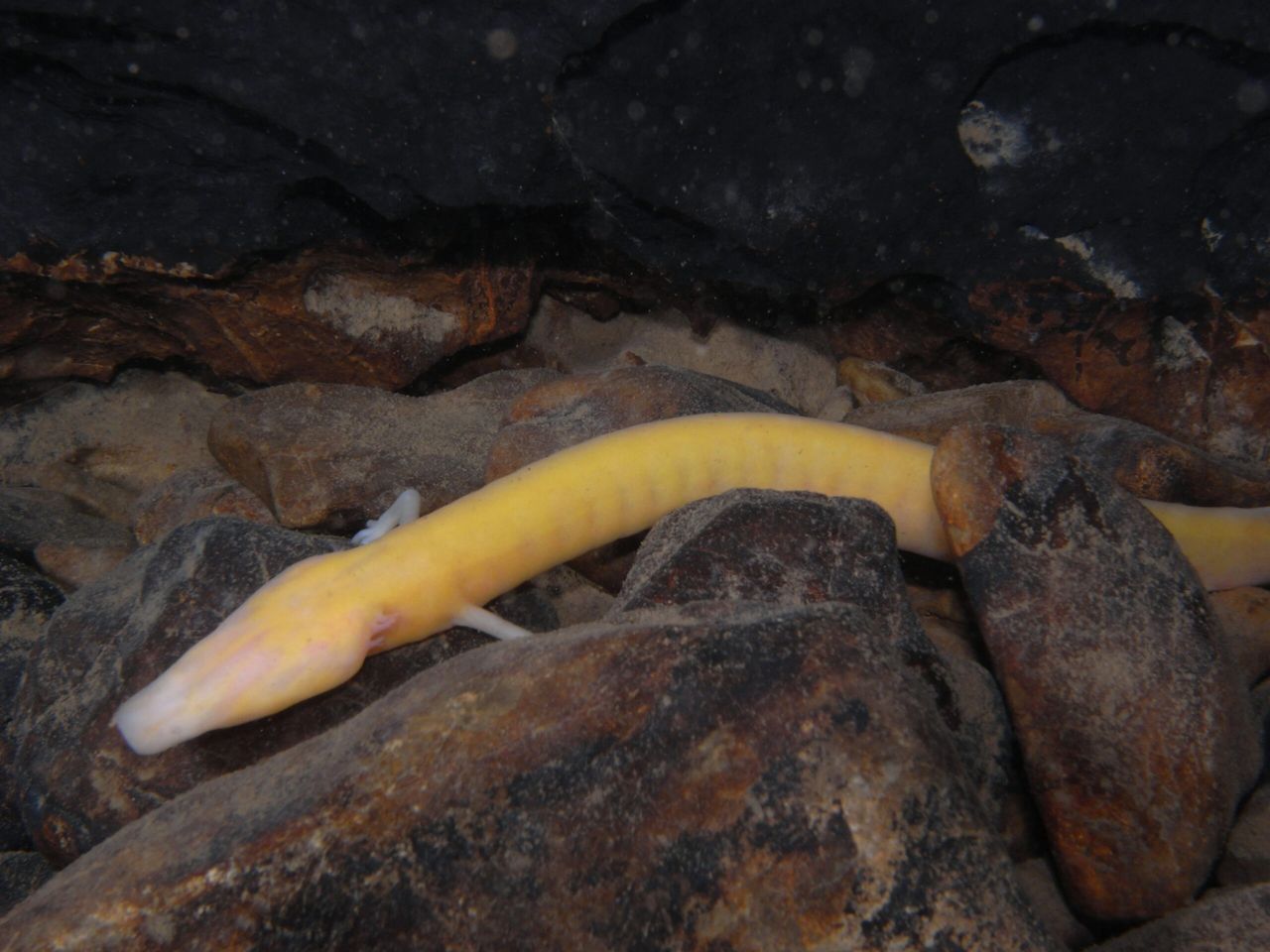
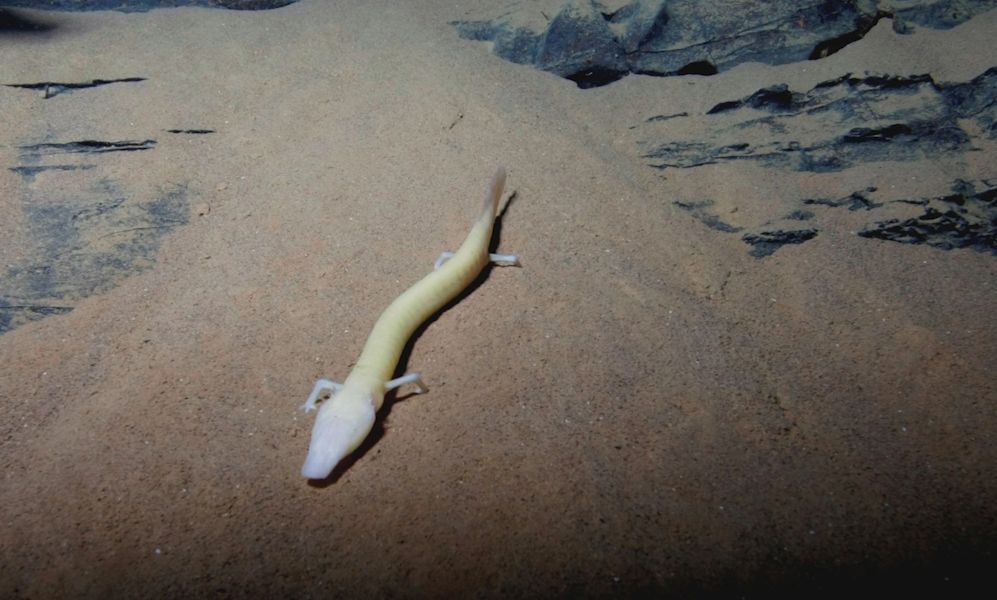
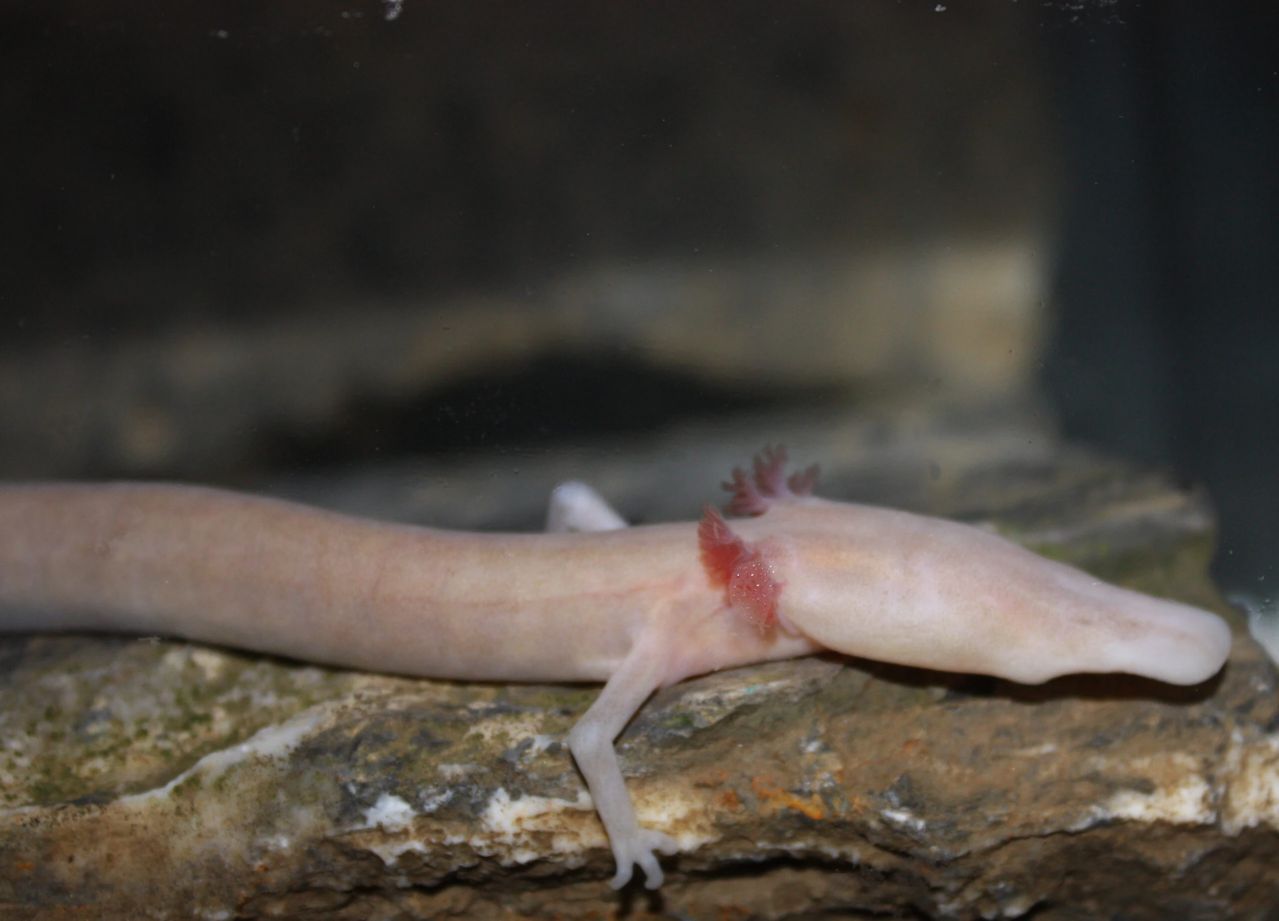
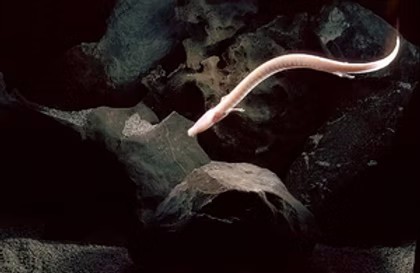
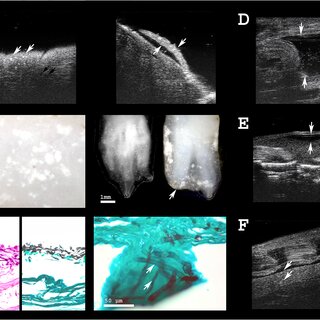
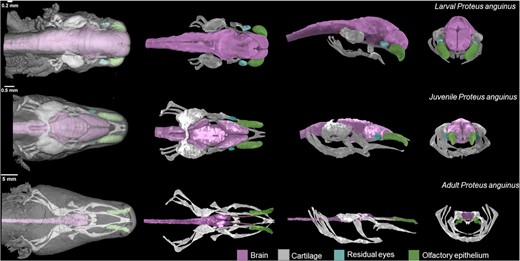
Olms completely lack pigment in their skin, appearing yellowish or pinkish depending on internal conditions and lighting, but a subspecies of Olm called Black Olms that live in their own distinct population have the pigment melanin in their skin, appearing darker. They have external gills on their heads used for gas exchange. They are tetrapods with their front legs having 3 fingers and their back legs having 2. Their tail is tapered and thin and surrounded by a fin. They have flattened heads covered completely in smooth skin with their eyes buried and their nostrils too small to notice. Fully grown they are usually between 20-30 centimeters, or 8-12 inches. The largest one was around 40 centimeters, or 16 inches. The olm has a web-like skull and considerable portions of the entire skeleton are mostly cartilaginous. The olm has many cavities filled with nerves relating to the olfactory senses. Very little other research has been done on their anatomy.
Reproduction
Olms breed every 12 years on average. A male will choose an area and establish a territory, chasing other males away, then will secrete a pheromone to attract females. When a female approaches, he fans his tail toward her head, then he touches her cloaca with his snout and viceversa. He moves in front of her and deposits a spermatophore, which she picks up with her cloaca and then it is stored in a special structure called a spermathecae. Then she leaves to establish an egg-laying territory where the olm will supervise its young as their eggs develop. Olms usually lay eggs around 35 at a time, with a maximum of around 70. They can take 2 to 6 months to hatch. Storing the spermatophore allows the olm to delay the laying of the young if conditions are unfavorable, and if taking long enough, the olm can actually give birth to 2 live young.
Social and Activity Patterns
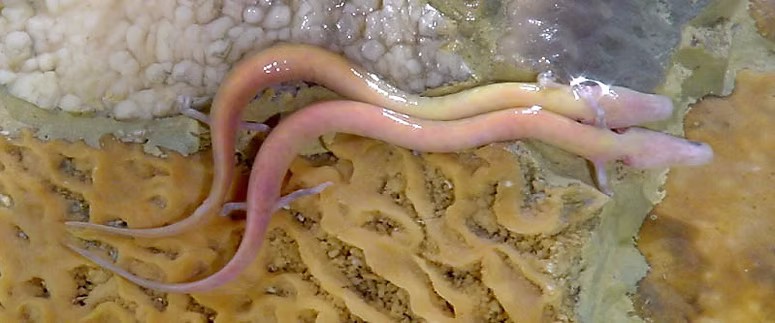
They are very social except for males when they are mating, which then they become territorial. They are almost always seen hanging out in groups, and very often two or more are seen cuddling. The reason for this behavior is not known. Originally it was thought this was to assist with mating, but they cuddle equally with members of both sexes. Usually olms wait for very long periods of time, and when they do move, it is very slow. They are often nestled in the bottoms of water sources between rocks and sand.
Feeding
Olms use their mouths to eat just about any organic matter they can get. They eat decomposing matter that falls down from the surface, as well as their cave dwelling neighbors, including isopods, snails, cave crickets, maggot-like worms, tiny fish, and troglodytic shrimp. It is an apex predator in its environment.
Gallery
Sources
https://en.wikipedia.org/wiki/Olm
https://www.edgeofexistence.org/species/olm/
https://www.pbs.org/wnet/nature/the-dragon-chronicles-the-olm-and-other-troglobites/4533/
https://www.aaas.org/news/weird-wonderful-creatures-olm
https://marybatessciencewriter.com/home/2015/07/01/the-creature-feature-10-fun-facts-about-the-olm
https://animaldiversity.org/accounts/Proteus_anguinus/
https://www.curiousspecies.com/my-species/olm
https://www.considernatureblog.com/post/consider-the-olm
https://academic.oup.com/gigascience/article/doi/10.1093/gigascience/giac030/6562166